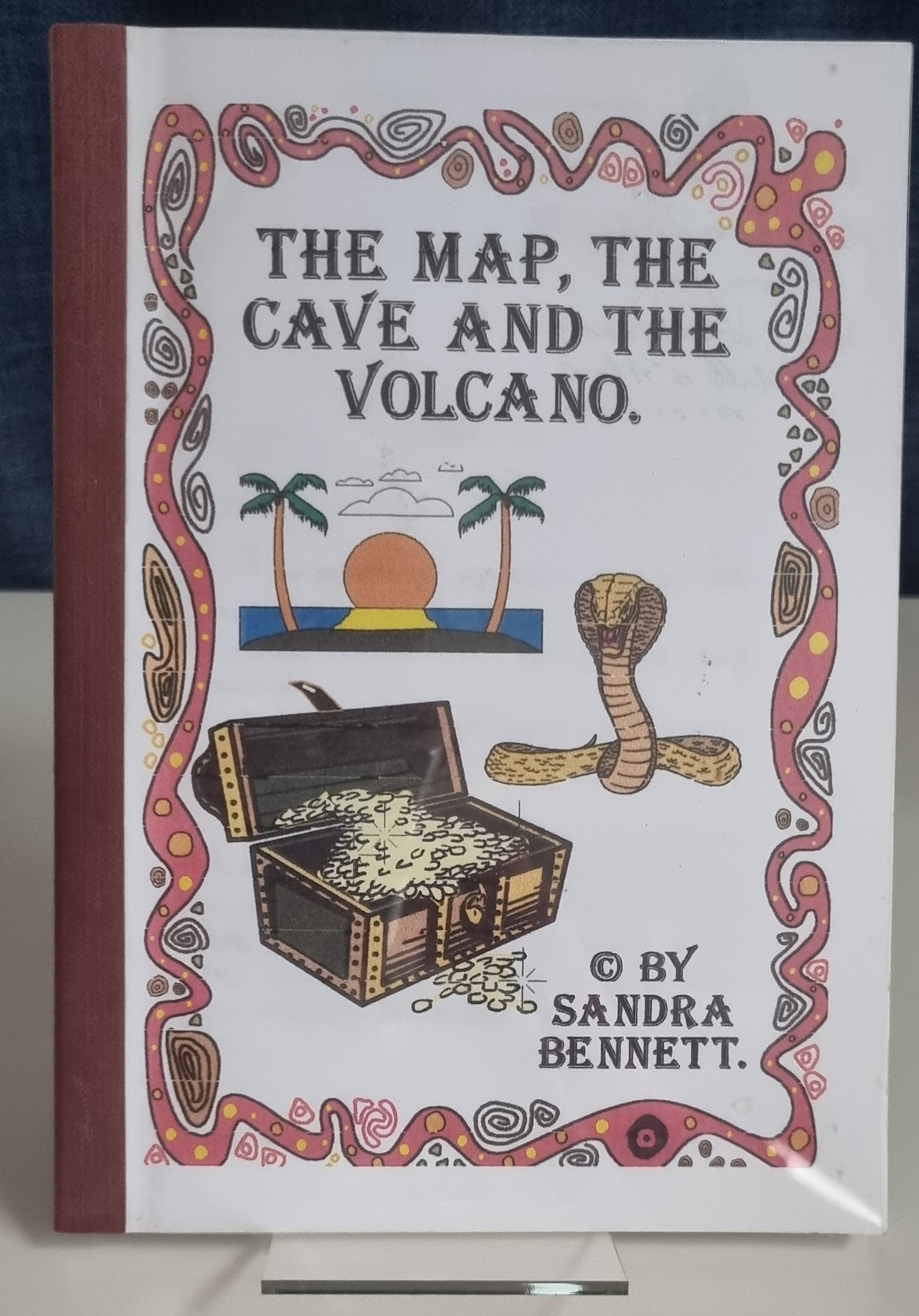
I’m in the middle of writing the first draft of a story that I hope will one day become the first book in a new middle-grade series. I had originally planned it to be junior fiction thinking I wanted to write something shorter and completely different to my Adamson Adventures series, but it quickly became evident that my writing style is too detailed and more suitable to that slightly older age group.
This process has had me thinking about memories and how they become a deep part of your story writing. This time around I have decided to set the story in a little fictional seaside country town and I realised it has come together through an accumulation of my childhood memories and some of the memories made when my own children were growing up.
Author friend and fellow blogger, Julie Gorges wrote about songs from our past and how they shape our memories in her blog last month. If you would like to read it the link is here - Boomer Songs, the Stories Behind the Music. I found it a fascinating read especially as I was including certain songs from the same era in my new work-in-progress.
This lead me to question just how much of our memories should we put into our stories? Especially when we are writing for children of a different era. It’s a bit of a juggling act, you need enough detail to make the story authentic, but not too much that it well get bogged down in the description. Does it help the story or is it too much? This is where you need to be brutal and, as the saying goes, ‘kill your darlings.’ But that can wait for a later draft. During the first stage of writing, it all goes in, if you start pondering whether a scene belongs or not because you have included too much description, even though it may slow the pace, if you stop and edit now, you’ll never finish the first draft. I admit I did hesitate, against my better judgement, I shared my first chapter with one of my writing friends. I value her support and advice. It was helpful to get her opinion that the descriptions based on my memories were just what my story needed so far, and that they set the scene so well that she was curious to want to read more. Note, I haven’t shared any more with anyone just yet but I look forward to the day when it will be ready.
At one stage while I was writing, (without giving too much away) I started to think about all the “Big’ attractions around Australia that I had seen. This brought back so many memories, I didn’t know where to begin, or what to include in my story. The obvious one that started the ball rolling for me, was the ‘Big Merino” at Goulburn because it is the closest to home and I have been there many times over the years. It’s a giant cement structure over 15 metres (about 49ft) tall. Visitors can walk into the shop inside and read information all about the wool industry in Australia. This always sparks further memories of my childhood as my dad was a wool classer and I have fond memories of the smell of the lanolin in the fibres and climbing all over wool bales during their annual work Christmas party.
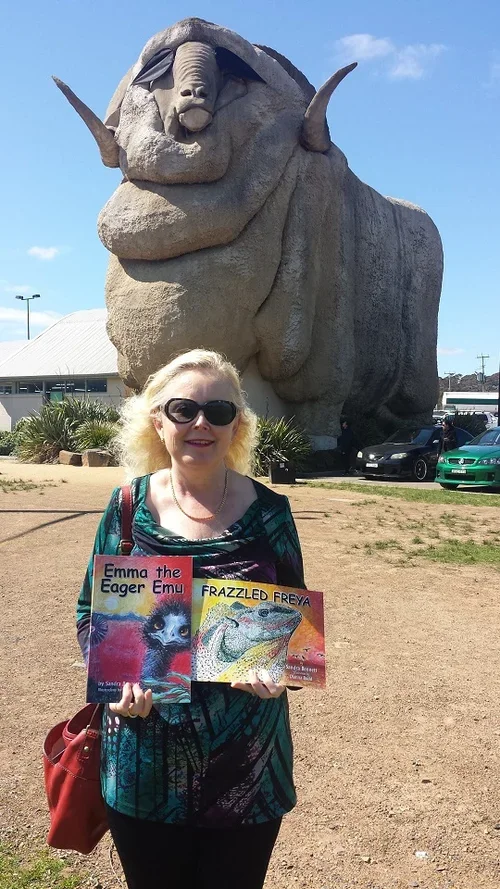
The Big Merino at Goulburn. My original picture books, Emma the Eager Emu and Frazzled Freya once graced the gift shop shelves.
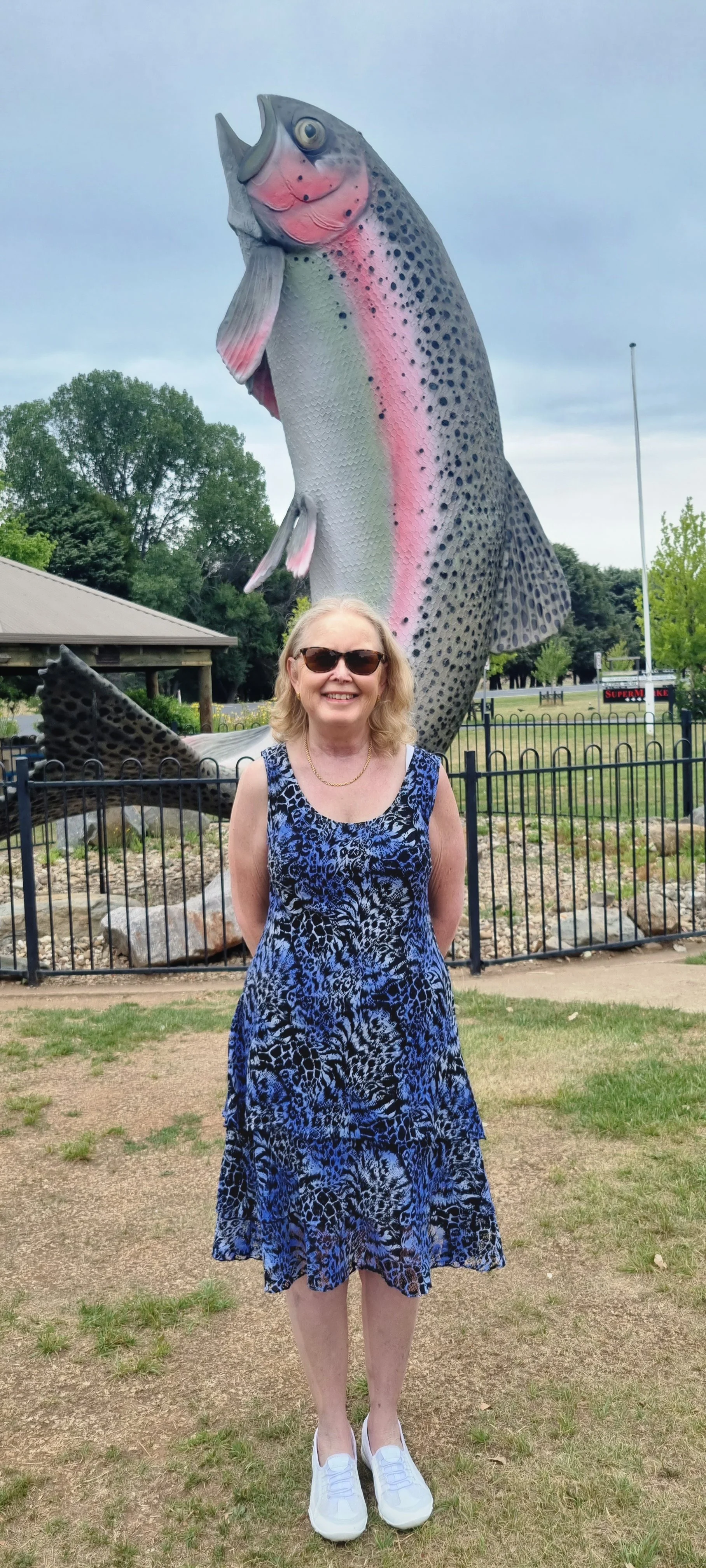
We have driven to Adaminaby many times in recent years, but I’m still no clearer as to where I originally saw the Big Trout when I was a child.
Another iconic “big” attraction near me is the ‘Big Trout’ at Adaminaby. It stands at 10m (32ft) tall and is made of fibreglass. It’s colours reflect the vibrancy of a rainbow trout. While Goulburn is about an hour to the north, Adaminaby is about 90 minutes south of where I live. I think the ‘Big Trout’ was probably one of the first of these big structures that I had seen. I remember a 3 day school trip when I was in year 6. It was the first time I had been on a plane. We flew from Sydney to Canberra, then bused down to the Snowy Mountains to see the Snowy Mountains Hydro Scheme. My memory is however a bit foggy on the details. Both old Jindabyne and old Adaminaby were flooded to make way for Lake Eucumbene as part of the hydro electricity scheme. My memory is that the trout was at Jindabyne, as I can see the lake behind it in my mind, but when I research it, it has always been at Adaminaby and there is no lake behind it. If anyone can help clear up my confusion, I would be grateful.
The first time I saw the ‘Big Banana’ at Coffs Harbour, I was ten years old and on a family holiday. I remember walking into the shop and the smell of banana instantly hit. We had the best banana ice-ream sundae ever that day.
Funnily I remember the ride in the ‘Nutmobile,’ a tractor train in the shape of macadamia nuts more than I do the ‘Big Pineapple’ where it was located on the Sunshine Coast in Queensland. I do recall climbing to the top of the big pineapple from inside to see the amazing view out over the sugar cane fields, and the banana and macadamia nut plantations. I was 12 when we visited it, and like the big trout, my memories are definitely a bit fuzzy.
The following images are all free stock photos as I can’t find photos from my childhood and surprisingly, I could not find a photo of the Big Galah in my saved images even though I know I took one.
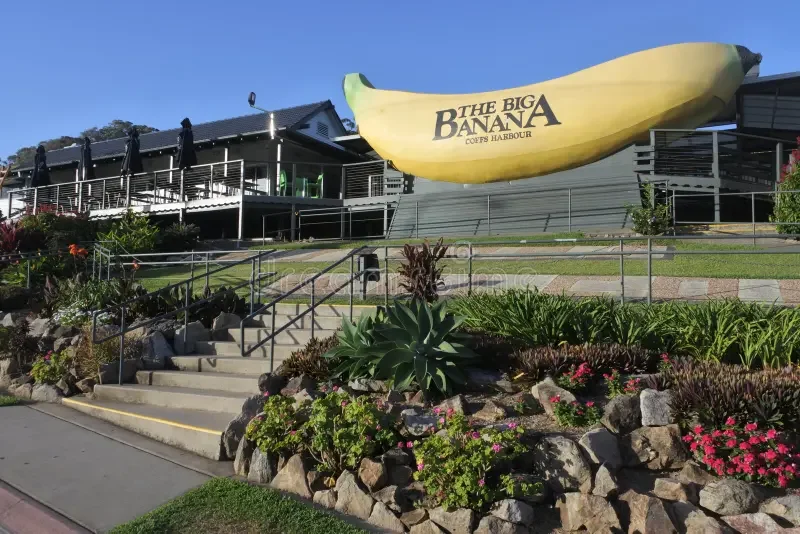
The Big Banana Coffs Harbour NSW
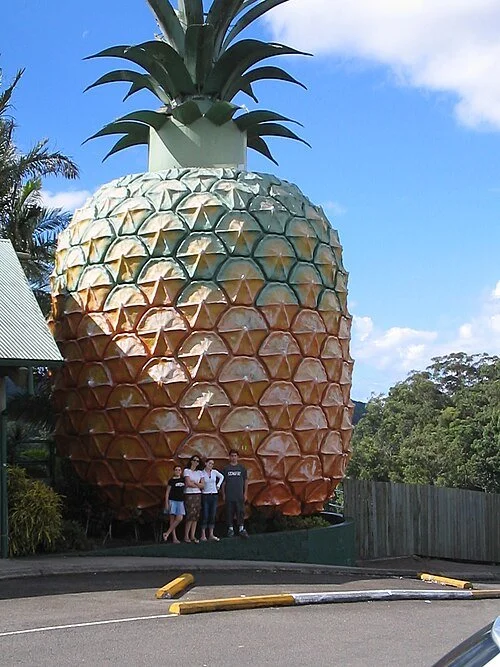
The Big Pineapple near Nambour on the Sunshine Coast, Queensalnad, Free stock image.
The big attraction that is the clearest in my memory is the ‘Big Galah,’ located halfway across Australia in the small rural town of Kimba. I remember it vividly as we were driving across the Nullarbor to Perth to visit our son ten years ago. This happened to coincide with the biggest storm that South Australia has ever experienced where it took out the power to the whole state for several days. I can tell you some incredible stories about that time, with everyone scrambling to find fuel , food and accommodation with any cash they may have had as all the ATM’s and eftpos machines were unusable as were petrol stations that didn’t have a back-up generator.
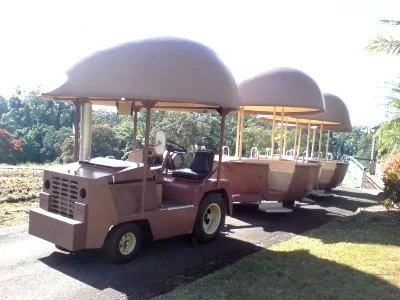
The Macadamia Nut mobile at the Big Pineapple, free stock image.
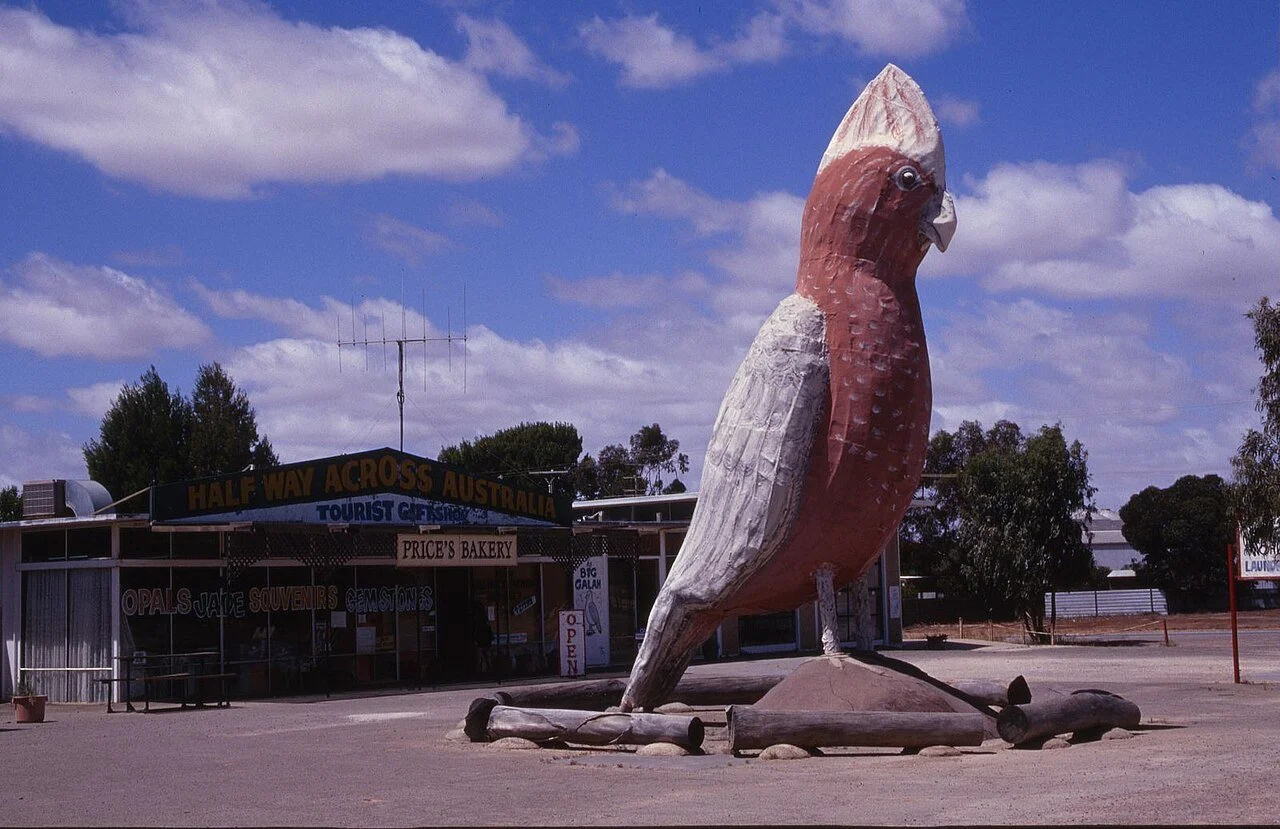
The Big Galah, Kimba South Australia, free stock image.
While Julie Gorges (and I did this too) used songs from her past to engage her memories, there are other strategies you can also use.
Photo albums are often a good place to start. Use specific photos to trigger memories by brainstorming things you can remember from that day. What was the weather like? How does it make you feel now and how did you feel then? Does it spark memories of sounds or smells? For example, If the picture is on a beach, can you feel the sand between your toes, is it cold and damp or dry and hot? Can you hear the waves crashing to shore or seagulls soaring in the sky above or fighting over a hot a chip that someone has thrown to them nearby. Is the wind blowing the salt air in your face? You can do this with any photo, just keep asking more questions each time you answer the first.
If you have diaries or journals, read through those to spark a memory. Have you kept birthday cards or special gifts given to you as a child? These too, can provide an avalanche of memories if you ask the right questions.
Sometimes a smell will create a memory. Have you ever walked into a kitchen where someone is baking something that takes you back to your childhood? Remember where you were and who you were with. What was happening? My Hubby can walk into a bistro and if he sees butter coiled on a dish on the table, he is instantly transported to the sea-liner that brought his family to Australia from Scotland when he was 4 years old. He can instantly recall many of the smells and sounds from his months on the ship.
What helps spark your memories?
What other strategies do you use?
What other ‘Big’ attractions have you seen that I haven’t mentioned here?